

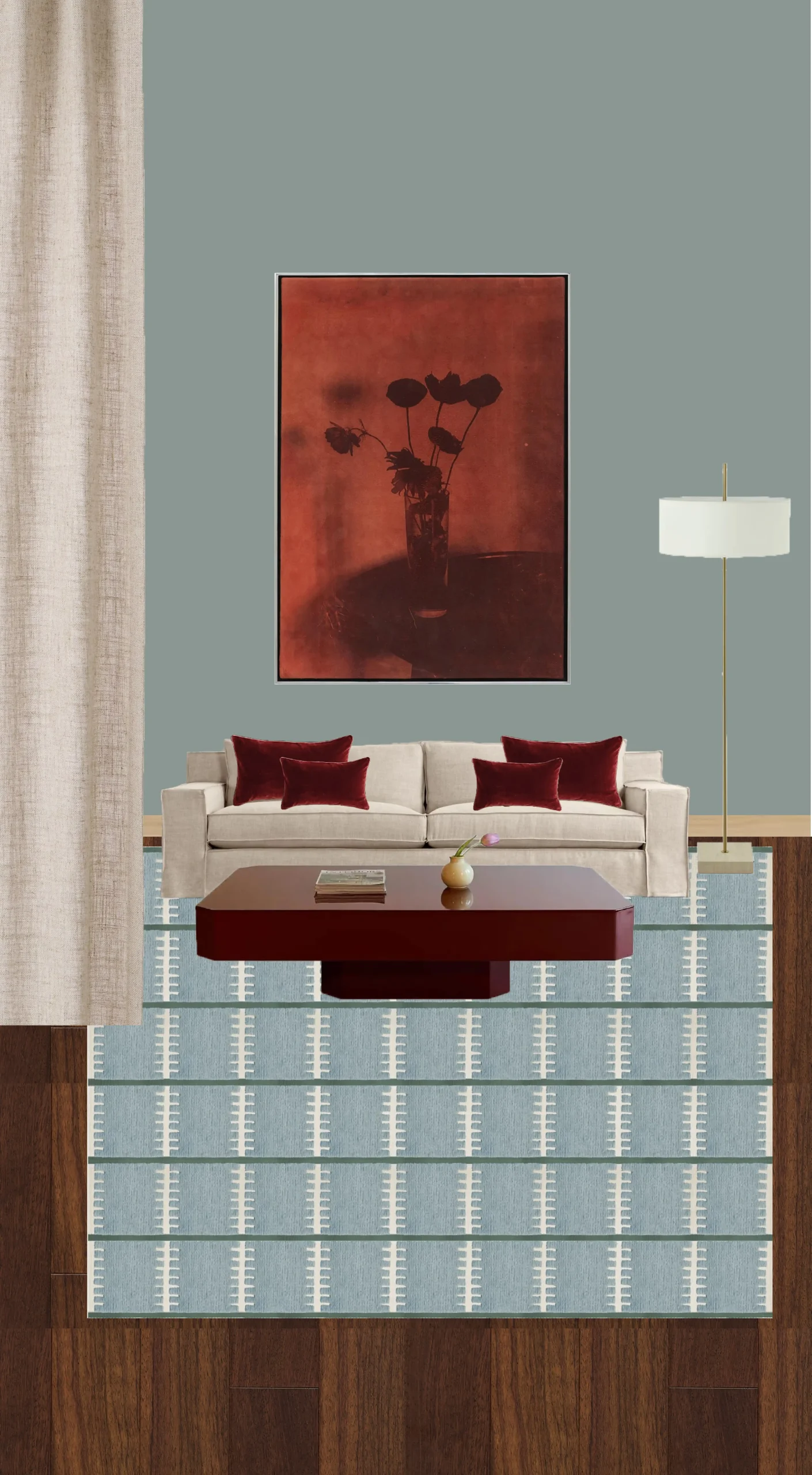
Many people feel hesitant about using color, often assuming it will make a space feel visually heavy. There is also the common challenge of knowing how to combine colors successfully, or even the fear of eventually getting tired of seeing the same tones over time.
Although designing a space with color can feel more complex, it plays a fundamental role. Studies have shown that visually rich and stimulating environments improve cognitive development, reminding us that spaces should not only be designed to look beautiful, but also to be lived in and experienced.
We shouldn’t be afraid of using color or feel intimidated by the process of choosing it, we simply need to understand how it works and that is exactly what this article is about.
So the question is: where do we start?
First of all, we should identify which colors naturally appeal to us, whether that’s blues, greens or warmer tones such as earthy shades and beige. Beyond aesthetics, it is equally important to understand the feeling each color creates and how natural light influences its perception throughout the day, making certain tones appear cooler, warmer, softer or more intense depending on the room’s sun exposure.
Once we choose a tone, we can begin building from there.
As shown in the following illustration, we start with a blue base that represents approximately 60% of the space. This color is applied to the walls and rug, elements that visually occupy a large portion of the room.
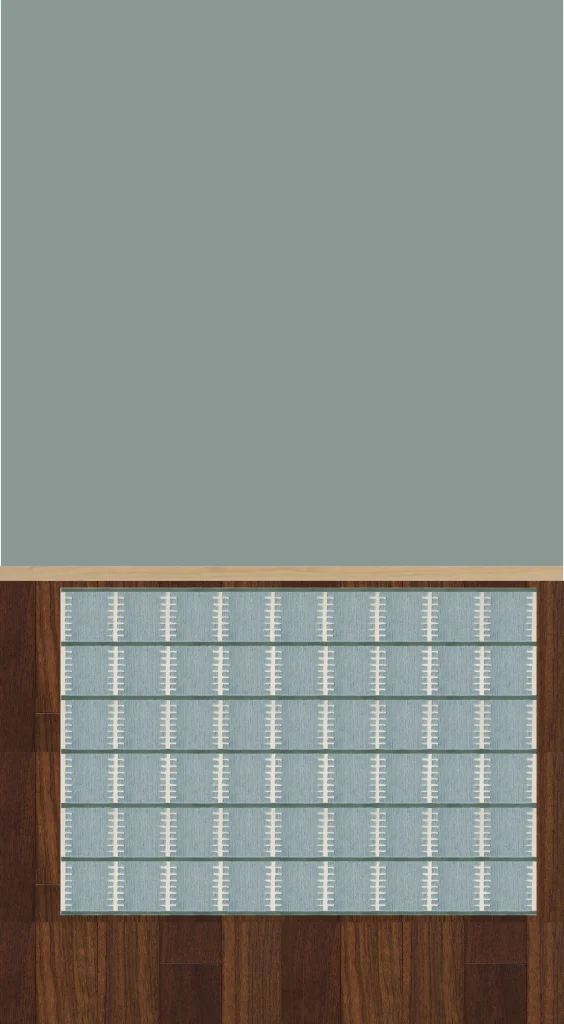
The main color of the space. It defines the visual foundation of the room and is typically applied to walls, large surfaces and larger furniture pieces.
Now, to balance this base, we introduce a neutral tone, beige. This color represents around 30% of the space and appears in the sofa and curtains, which, after the walls and rug, are the elements with the greatest visual presence.
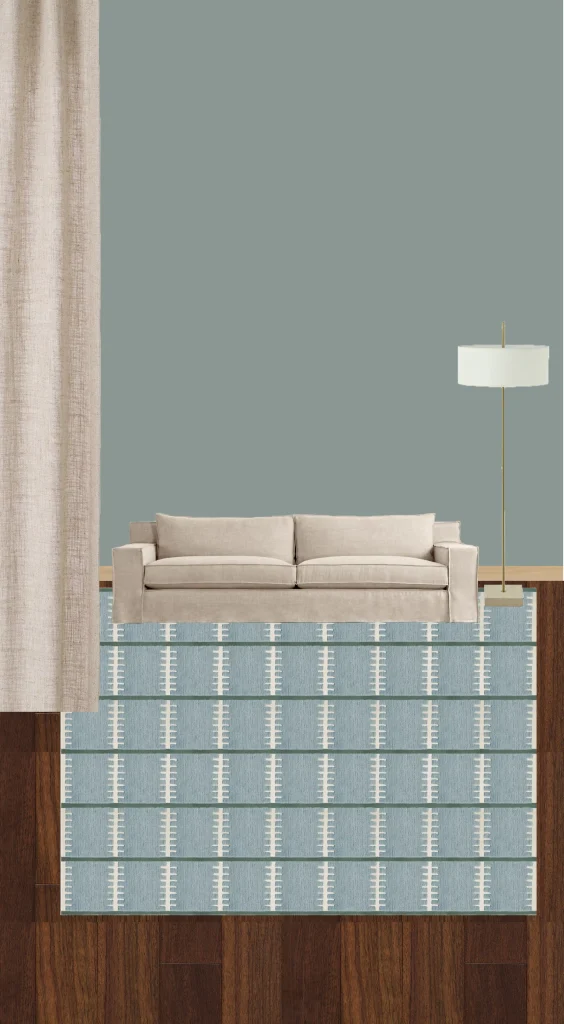
The color that complements the dominant tone and creates balance. It can appear in furniture, textiles or accent elements.
Finally, we reach the boldest and most playful part of the composition: introducing the accent color.
This represents the remaining 10% of the space, although in the illustration below it creates a stronger visual impact. Depending on the room and the selected palette, we can sometimes be more adventurous and incorporate a larger amount of color accents.
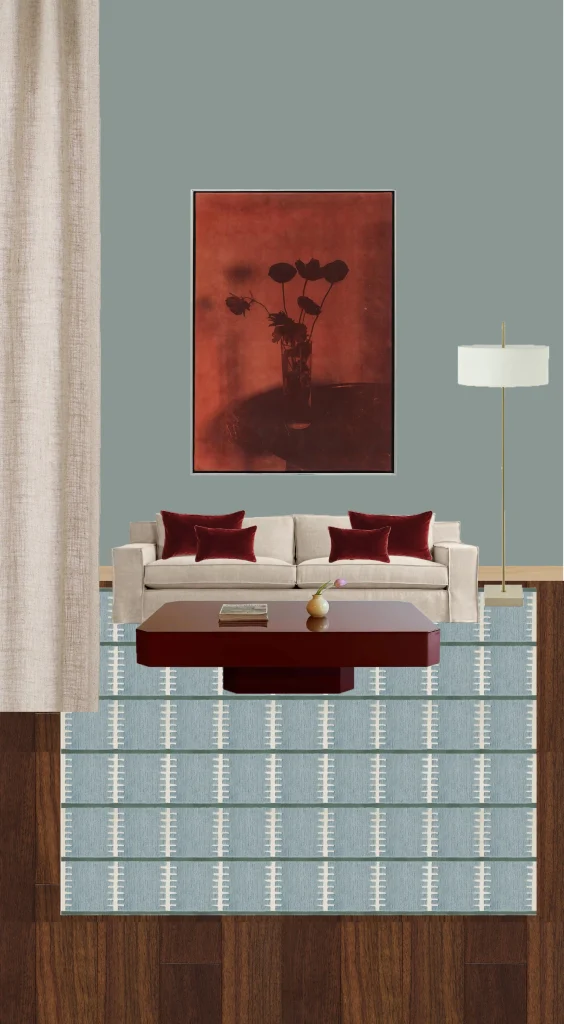
The color used in the details to create contrast and add personality to the space — cushions, decorative objects, artwork or small accent pieces.
Throughout these illustrations, you can see the process and understand how important this final 10% accent color truly is. Without it, the space would feel too monotone and visually flat, even with blue acting as the main colour.
More than simply using color, what truly matters is creating contrast and visual depth within a space.
In this example, the burgundy tone introduces exactly that, bringing contrast, personality, balance and a pop of color that makes the environment feel more interesting and complete.
For those who still do not feel comfortable taking risks with color, these accents can be introduced through elements that are easier to replace, such as cushions, chairs, artwork, lamps or small decorative objects.
These are simple ways to experiment with color without commitment, yet with a significant impact on the space.
Color should make us feel something.
That is what transforms a house into a space with identity and emotion.
Ultimately, working with color is an exercise in balance, sensitivity and intention. Through this process, a space develops character and becomes truly personal, something we always seek to explore in every interior design project.
If you’d like to see this concept applied in a more visual way, you can watch our short Reels here: Instagram


